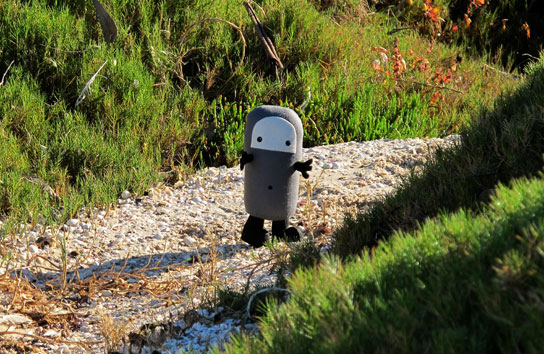
Now that's A LOT of bullets to carry...doesn't he look happy?
Thursday, July 28, 2011
Getting Ready for War
I found this image as part of an article of war propaganda in my great History of WWII series. I just reminds me of knitting and old fashion catalogues, only thing is this image probably precedes them...
Tuesday, July 26, 2011
Terrain Training Tuesday: Six months in a Leaky Boat Part 1
Did you know that four-fifths of the Earth’s surface is open water? Unfortunately this is one of the most difficult environments to survive in, as water and wind chill the body rapidly. Short-or long-term survival depends upon rations and equipment available and your ingenuity. You must be resourceful to survive. Lucky you’re a member of the HiiRagi Army, resourcefulness and ingenuity are second nature to us.
Now, you’re at sea and it’s all gone to crap. The boat is sinking due to the incompetence of others and now you’re paying the price. The decision to abandon ship is usually very difficult, but cut your losses and take care of yourself. In some instances, people have perished in their life raft while their abandoned vessel managed to stay afloat. Other cases indicate that people waited too long to successfully get clear of a floundering boat.
So decision made. Go and put on some (preferably woollen) clothing, including hat and gloves, and wrap a towel around your neck. Grab your survival kit and any sweets or chocolates that you have. Don’t panic, remember to breathe, keeping calm is the key to your survival. Grab a life jacket if you can and your life will be much easier. If not, air trapped in your clothing will aid buoyancy so keep your clothes on (despite other advice to the contrary).
If by some misfortune you have been swept overboard keep afloat and try to attract attention. Sound travels well over water and movement always attracts attention. But I think we'll just let Kurt and Goldie go, someone else will save them I'm sure...
Now where’s that frickin’ life raft?
Thursday, July 21, 2011
Illustrator Inspiration: Travis Chatham
Travis Chatham is a Californian artist trained at the Art Centre College of Design in Pasadena, California. His bio is really cute. He had three goals: 1) to be a Rock Star; 2) to be a Pro Skater; and 3) to be a Pro Artist. Apparently he still working on being a Rock Star, ate too much to be a Pro Skater ( I know this one myself) and as for being a Pro Artist, he makes a living teaching and illustrating and being a fine art painter. Sounds alright to me.
He lists his influences as Egon Sheile, Barry McGee, Margaret Kilgallen, Tony Hawk, Animal Chin and many more, all of them pretty awesome and worth checking out. Besides these, he is influenced by covered up graffiti, in particular the graphic shapes that occur when it happens. You can totally see this influence in the examples I have shared.
Once again, I like it.
Tuesday, July 19, 2011
Terrain Training Tuesday: The Desert Part 6
The last in our Desert series we look at all the heat problems you may encounter. Your chances of becoming a heat casualty as a survivor (which all HiiRagi minions are) are great, due to injury, stress, and lack of critical items of equipment. Following are the major types of heat casualties and their treatment when little water and no medical help are available, only a random camel...
Heat Cramps
The loss of salt due to excessive sweating causes heat cramps. Symptoms are moderate to severe muscle cramps in legs, arms, or abdomen. These symptoms may start as a mild muscular discomfort. You should probably stop all activity, get in the shade, and drink water. If you fail to recognize the early symptoms and continue your physical activity, you will have severe muscle cramps and pain, this is not good. Treat as for heat exhaustion.
Heat Exhaustion
A large loss of body water and salt causes heat exhaustion. Symptoms are headache, mental confusion, irritability, excessive sweating, weakness, dizziness, cramps, and pale, moist, cold (clammy) skin (hmmmm....that sounds like most people to be honest). Immediately get under shade. Lie on a stretcher or similar item about 45 cm off the ground. Loosen clothing. Sprinkle with water and fan. Drink small amounts of water every 3 minutes and stay quiet and rest.
Heat Stroke
A severe heat injury is caused by extreme loss of water and salt and the body's inability to cool itself. The patient may die if not cooled immediately. Symptoms are the lack of sweat, hot and dry skin, headache, dizziness, fast pulse, nausea and vomiting, and mental confusion leading to unconsciousness. Immediately get the person to shade. Lay him on a stretcher or similar item about 45 cm off the ground. Loosen his clothing. Pour water on him (it does not matter if the water is polluted or brackish) and fan him. Massage his arms, legs, and body. If he regains consciousness, let him drink small amounts of water every 3 minutes.
And speaking of mental confusion caused by heat....
I found this and couldn't help putting it in, this is what happens when you are in the desert too long. Go and see the full video here. It's ace! Or maybe I just love Star Wars that little bit too much....
And speaking of mental confusion caused by heat....
I found this and couldn't help putting it in, this is what happens when you are in the desert too long. Go and see the full video here. It's ace! Or maybe I just love Star Wars that little bit too much....
Friday, July 15, 2011
RU1014: The Return
Ok, so those who have been reading for a while will remember RU1014, one of my favorite Recon Units, who went out into the world to explore and report of threats or agents of the HiiRagi cause. Unfortunately he was last seen cavorting with Transformers who he mistakenly took as his father even though I had (very patiently I thought) explained about his father. This then led to complete silence from RU1014 until this week when I had some images sent to me. These images were very troubling as you can see below:
Hmmmm.....
I always thought Transformers were bad news and that's before I even saw the crappy movie....
Obviously RU1014 is having a few issues with relationships and how to deal with the lies the Transformers filled his head with. I let it go however and hoped that RU1014 would come to his senses, he has always been an expereiential type of robot...That was until these polaroids below were sent to me....
Enough was enough, these "friends" were obviously not of the highest standards and I'll be damned if they think they can treat MY RU1014 like this. These polariods were sent purely to hurt me and my cause and quite frankly I was bored with the whole situation, so I did what any self respecting World Domination Leader would do. I reached for the mobile device with the 'Return to HQ' button and pressed it. Now any who meet me will know I like immediate responses and I was so happy when my dearest little RU1014 was found on one of the paths leading to HiiRagi HQ yesterday. Bless, look at his little out stretched arms! Come home little one all is forgiven!
Now begins the training and re-induction of RU1014, wiping all memories of the useless and incompetent Transformer influence. Fear not RU1014, you will once again rise to the greatness of the HiiRagi cause and take your rightful place by my side!
First a hot toddy of whiskey though I think.....
Tuesday, July 12, 2011
Terrain Training Tuesday: The Desert Part 5
Now in a desert survival and evasion situation, it is unlikely that you will have a medic or medical supplies with you to treat bites and stings, though if you are a fully prepared minion you just might...
Insects, spiders, scorpions and snakes are, though cool to look at and perhaps poke with a stick when there is medical help nearby, dangerous and in the Desert just don't go there. If you get bitten you will probably die a slow painful death in addition to the nasty sunburn you already have.
Insects of almost every type abound in the desert. Man, as a source of water and food, attracts lice, mites, wasps, and flies, all the good ones. They are extremely unpleasant and may carry diseases. Old buildings, ruins, and caves, though cool, are favourite habitats of spiders, scorpions, centipedes, lice, and mites. These areas provide protection from the elements and also attract other wild-life. Therefore, take extra care when staying in these areas.
A point to remember though is that most of these threats don't really want to attack you, it's usually us humans treading on them that causes the issue so don't place your hands anywhere without first looking to see what is there. Visually inspect an area before sitting or lying down. When you get up, shake out and check your boots and clothing.
All desert areas have snakes.
They inhabit ruins, caves, and natural rock outcrops that offer shade. Never go barefoot or walk through these areas without carefully inspecting them for snakes. Pay attention to where you place your feet and hands. Most snakebites result from stepping on or handling snakes. Once you see a snake, give it a wide berth, they don't like to make friends.
And if you see a sarlaac like this:
Avoid.
Saturday, July 9, 2011
June Sketchbook
There's been a lot of thinking and planning happening at HiiRagi HQ this month. Nothing concrete as yet but we all know the value is in the thinking and the planning. Now so as to not make the mistake that every other power hungry world domination expert does and reveal all my cards before I've even touched the switch to destruction, this months sketchbook is just a few little details of my greater plans. Stay tuned little minions....
Thursday, July 7, 2011
Illustrator Inspiration: Eduardo Recife
Eduardo Recife is an artist, illustrator, graphic designer, and typographer from Brazil. He creates beautiful collages with a vintage, old style era feeling. Most of these collages are processed by hand to create textures, stained, scratches and doodles and then finished off by computer. Aren’t they amazing?
He has a great personal website that features his personal works, collages, drawings, and typefaces which is well worth checking out too.
Tuesday, July 5, 2011
Terrain Training Tuesday: The Desert Part 4
Surviving and evading the enemy in an arid area depends on what you know and how prepared you are for the environmental conditions you will face. In a desert area there are seven environmental factors that all minions must consider:
- Low rainfall.
- Intense sunlight and heat.
- Wide temperature range.
- Sparse vegetation.
- High mineral content near ground surface.
- Sandstorms.
- Mirages.
Low Rainfall
Low rainfall is the most obvious environmental factor in an arid area. Some desert areas receive less than 10 cms of rain annually, and it comes in brief torrents that quickly run off the ground surface. You cannot survive long without water in high desert temperatures but lucky for us we covered this last week and are completely in control of the whole water thing.
Intense Sunlight and Heat
Intense sunlight and heat are present in all arid areas. Air temperature can rise as high as 60 degrees C during the day. Heat gain results from direct sunlight, hot blowing winds, reflective heat and conductive heat from direct contact with the desert sand and rock. The temperature of desert sand and rock averages 16 to 22 degrees C more than that of the air and will increase the body's need for water. To conserve your body fluids and energy, you will need a shelter to reduce your exposure to the heat of the day. Travel at night (preferably with moonlight to help you see) to lessen your use of water. Radios and sensitive equipment exposed to direct intense sunlight may also malfunction.
Wide Temperature Range
Temperatures in arid areas may get as high as 55 degrees C during the day and as low as 10 degrees C during the night. The drop in temperature at night occurs rapidly and will chill a person who lacks warm clothing and is unable to move about. The cool evenings and nights are the best times to work or travel.
Sparse Vegetation
Vegetation is sparse in arid areas. You will therefore have trouble finding shelter and camouflaging your movements. During daylight hours large areas of terrain are visible and easily controlled by small opposing forces. If travelling in hostile territory, follow the principles of desert camouflage:
- Hide or seek shelter in thicker growths of vegetation and cover from oblique observation.
- Use the shadows cast from brush, rocks, or outcropping. The temperature in shaded areas will be 11 to 17 degrees C cooler than the air temperature.
- Cover objects that will reflect the light from the sun.
Before moving, survey the area for sites that provide cover and concealment. You will have trouble estimating distance. The emptiness of desert terrain causes most people to underestimate distance by a factor of three: What appears to be 1 km away is really 3 km away.
High Mineral Content
A lot of arid regions have areas where the surface soil has a high mineral content (borax, salt, alkali, and lime). Materials in contact with this soil wear out quickly, and water in these areas is extremely hard and undrinkable. Wetting your outfit in such water to cool off may cause a skin rash and no one wants that.
Sandstorms
Sandstorms occur frequently in most deserts. The "Seistan" desert wind in Iran and Afghanistan blows constantly for up to 120 days! Expect major sandstorms and dust storms at least once a week.
The greatest danger is getting lost in a swirling wall of sand. Wear goggles and cover your mouth and nose with cloth. If natural shelter is unavailable, mark your direction of travel, lie down, and sit out the storm. Dust and wind-blown sand interfere with radio transmissions. Therefore, be ready to use other means for signalling such as mirrors.
Mirages
Mirages are a fascinating optical phenomena caused by the refraction of light through heated air rising from a sandy or stony surface. They occur in the interior of the desert about 10 km from the coast. They make objects that are 1.5 km or more away appear to move, making it difficult for you to identify an object from a distance. It also blurs distant range contours so much that you feel surrounded by a sheet of water from which elevations stand out as "islands."
To cope with this if you can get to high ground (3 meters or more above the desert floor), if you can get above the superheated air close to the ground you can overcome the mirage effect. Mirages make land navigation difficult because they obscure natural features. You can survey the area at dawn, dusk, or by moonlight when there is little likelihood of mirage.
Now that's a mirage...the perfect desert outfit I'd say....
Subscribe to:
Posts (Atom)